
There are many routes into the bottomless pit that is Archive TV. I believe the majority are driven to early TV programming by nostalgia and a harking back to a remembered younger, seemingly simpler time. This appears to be borne out by the general demographic of old TV aficionados. Most of us are not exactly spring chickens!
But that is not the whole picture. ‘Most’ is not ‘all’. So how is it that the outliers in the pool of Archive TV obsessives – those way too young to remember the perilous realm of nothing but free-to-air TV – come to be swept up into seeking out old dramas and comedies produced long before they were born?
Some may be intrigued by stories from parents, grandparents and other older relatives, about the shows they watched when they were kids. Others may be historians at heart and wish to know all there is to know about the industry of the television they watch. And perhaps, very rarely, an old piece of telly may be stumbled across on some streaming service, and a new victim captured. However, I believe the chief enabler and corrupter of younger audiences – and many older addicts like myself – the true gateway drug to Archive TV is one particular British made science fiction television show. Doctor Who.
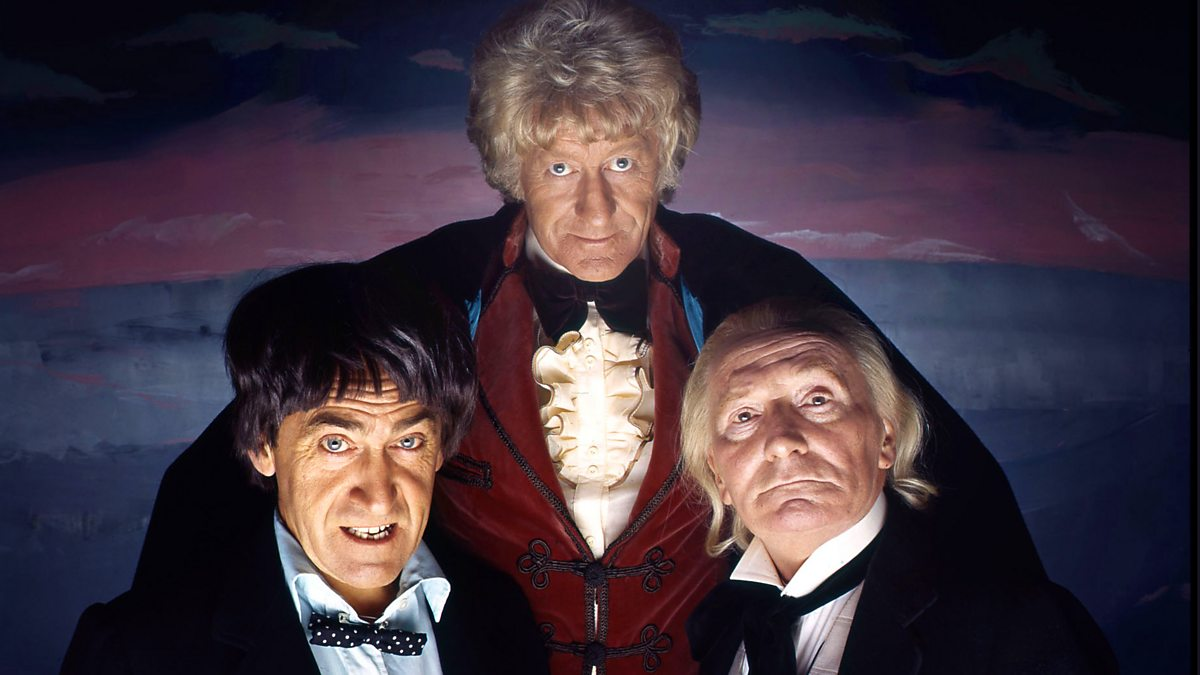
I discovered Doctor Who at around the age of 9 and I was very quickly hooked. In Australia at that time Jon Pertwee was approaching the end of his run as the Doctor and unbeknownst to me the show already had a nearly 10 year history. As well as a bunch of the Pertwee stories that I had missed there were two previous Doctors and a raft of black and white adventures that I had never seen. Sadly, I came to the show shortly after the ABC decided to repeat only the more recent colour episodes and so remained blissfully unaware of the magic of what came before. That is until the show’s 10th Anniversary story, The Three Doctors, was repeated in South Australia in 1975.[1] Suddenly I was confronted by Patrick Troughton and William Hartnell… and they were the Doctor too?!

The revelation that this character that I had fallen in love with had a whole history that I had never seen was incredibly intriguing. I wanted to know more and to see where this amazing show had truly begun.
My fascination with what came before in this unique program must still hold true for many new viewers who have come to know the Doctor sometime in the last 50 years. Doctor Who, whenever it is discovered, is an iceberg and those poor souls who become enraptured will one day wish to dive down into the dim black and white world of 1960s Who. And oh, what diamonds they will find!
There are not many programs that have spanned such a vast section of the history of television as Doctor Who. The Star Trek franchise is possibly the closest comparison in that it also started in the 1960s, but each of its iterations were different shows, set in different eras with a different set of characters. Incredibly, the title character of this show that hit British TV screens in 1963 – and Australian telly in 1965 – is the very same character that new viewers may discover in brand new episodes streaming on Disney+!
In my youth I learned more about the adventures of previous Doctors in Doctor Who Monthly magazine and got to read their stories in the Target novelisations. It wasn’t until years later that I was able to see any of these mythical early stories, first via barely watchable multi-generation black market recordings (I may very well speak more about those exciting years in a future post!) and then when they were finally made available for home viewing on BBC Video.
It must be quite a shock for today’s streaming generation to be presented with the vastly different pacing and production style of 1960s television. I have listened to the struggles of many young devotees on numerous podcasts as they tackle a 6 or 7 episode Hartnell story for the first time. I was used to the 25 minute episode structure of classic Who when I first got my greedy hands on The Daleks, and my earliest TV memories were from before my parents bought a colour television. For a new fan who is used to an entire adventure resolving in 45 minutes, the long form story telling where dialogue is much more important than visuals can take some getting used to. Many, understandably, will dip their toe and quickly discover this startlingly different form of television is not for them.
Yet for some the virtually live, well-rehearsed performances, filmed in small studios with multiple cumbersome video cameras, captures something in their imagination. It may be the discovery of a raft of new (to them) high calibre actors, many theatre-trained, that leads that viewer to seek out other performances by these long gone stars in other contemporary shows. Others may find the seeds of modern story telling in these old classics and wish to see more work from the original writers at a time when such tales were fresh and new. Or perhaps their fascination will be captured by the very nature of the way television was created in those early days, as fearless young directors and artists boldly explored the boundaries of what this new medium of television could do.
Whatever it is that inspires these Doctor Who explorers to look beyond their beloved show and branch out into the vast ocean of archive television, they are a welcome addition to our otherwise aging ranks. And with the ever-growing number of old shows being made available on physical media and brought back to a variety of streaming services – YouTube in particular – there has never been a better time.

Leave a Reply